Your tent is your home away from home, and the right one makes every other part of camping easier. The wrong one, whether too small, too hard to pitch or not waterproof enough for the weather, can end a trip early. Fortunately, choosing well is mostly a matter of asking a few clear questions and knowing what the numbers on the label mean.
This guide explains the main types of camping tent, the materials and ratings to look for, and how to size a tent for your group. We do not rank brands or quote prices, because both change constantly. Instead, you will be able to look at any tent and judge whether it suits the way you camp.
Start with how you camp
Before you look at a single tent, answer three questions.
How will you get to camp? If you drive right up to your site, weight and packed size barely matter, and you can choose a roomy tent with tall walls. If you carry everything on your back, every gram counts and you will want a compact hiking tent.
When and where will you camp? A tent for mild spring weekends at a sheltered campground is very different from one that must stand up to summer storms, coastal wind or cold winter nights in the ranges.
Who is coming? Count the people and think about the gear. Two adults with children, bags and an esky need a lot more floor space than two hikers.
The main tent designs
Dome tents
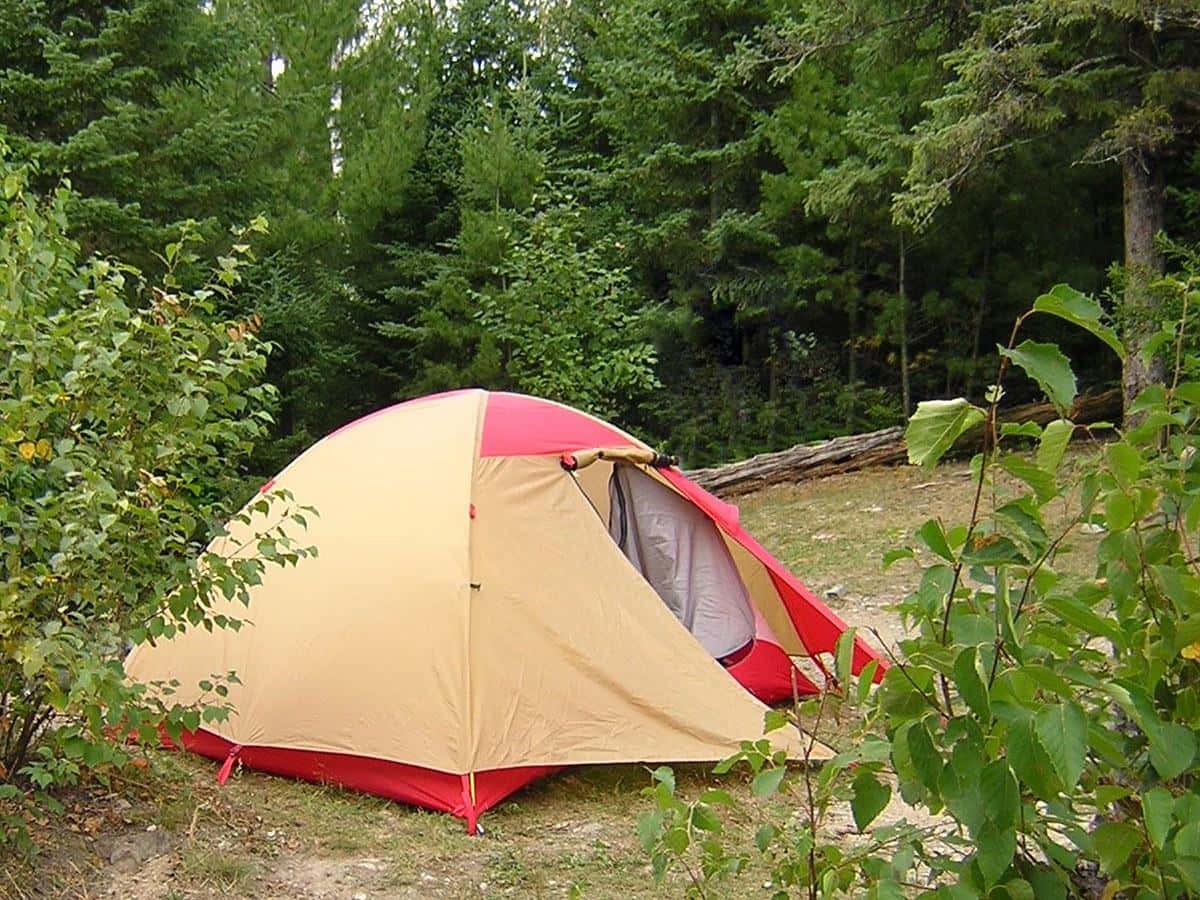
Dome tents are the most common recreational design. Two or more flexible poles cross over the top and bend into arches, creating a free-standing structure. According to standard references on tent design, dome tents come in a wide range of sizes, from lightweight two-person tents with limited headroom up to six- or nine-person tents with headroom over 180 cm. They are relatively simple to pitch and suit most car camping. A common variation adds a third pole to support an extended flysheet, creating a porch or storage area.
Tunnel tents
Tunnel tents use a series of parallel hoops to create a long, tunnel-shaped space. They offer a lot of usable floor area for their weight and can perform well in wind when pitched end-on. Most tunnel tents are not free-standing, so they rely on good pegging and guy ropes.
Frame tents
Frame tents have a free-standing steel frame with an outer tent draped over it and inner sleeping compartments. They have near-vertical walls, generous headroom and often a large living area. They are heavy and take longer to pitch, but they are comfortable for long stays at one site.
Instant and pop-up tents
Instant tents have pre-attached poles that unfold into shape, and pop-up tents spring open on their own. They are very quick to set up, which suits festivals and short fair-weather trips. Check how they pack down, as some are bulky, and look closely at the waterproof rating and pole strength.
Hiking tents
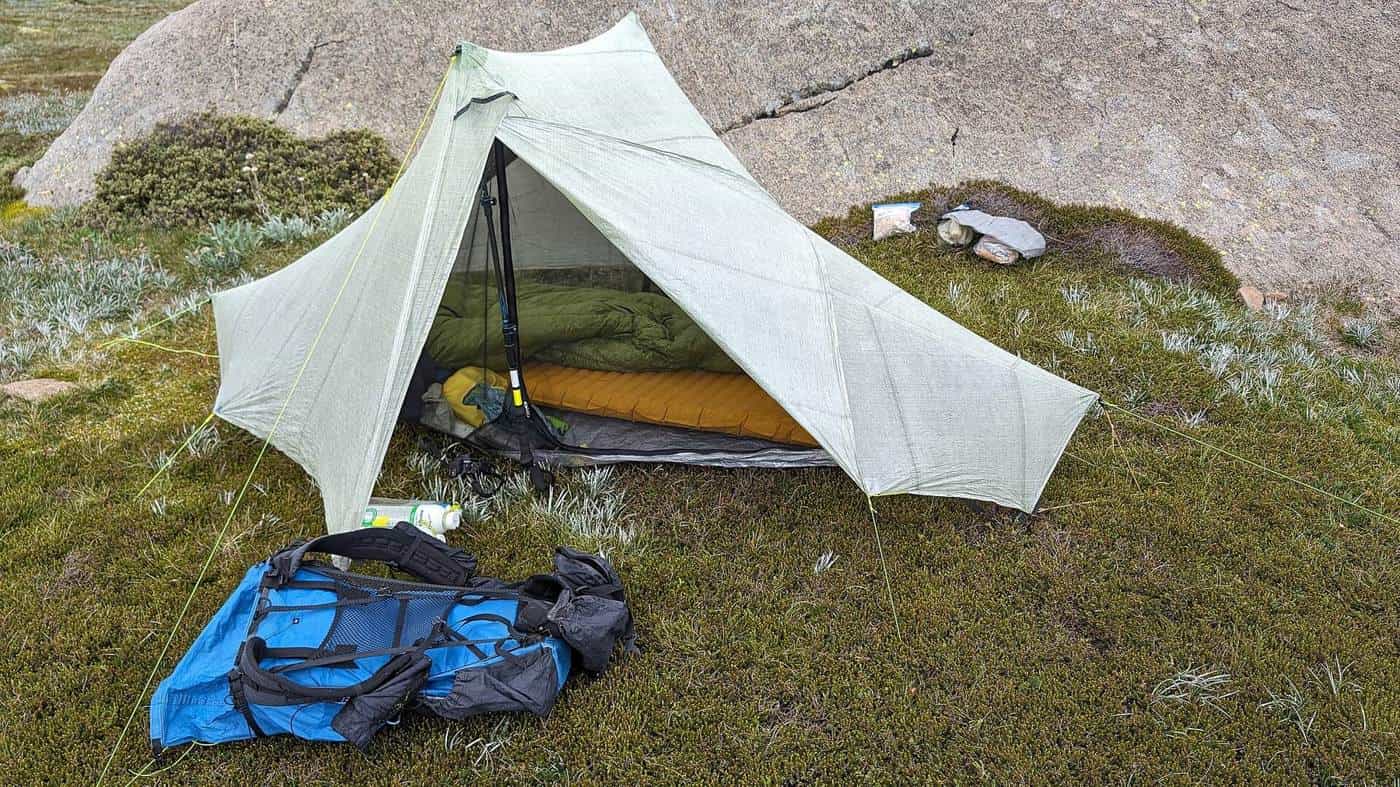
Hiking tents prioritise low weight and small packed size. They are often single skin or use very light fabrics, and some use trekking poles instead of dedicated tent poles. They usually have little headroom and space for gear.
Single skin or double skin?
This is one of the most important differences between tents, and it affects comfort far more than many buyers realise.
Single skin tents use only one waterproof layer for the roof and walls. They are light and quick to pitch, but condensation from your breath can form on the inside of the walls. Some expedition tents use waterproof-breathable fabric to reduce this.
Double skin tents have a waterproof outer layer, called the flysheet or fly, that extends down to the ground, plus one or more breathable inner tents for sleeping. Water vapour passes through the inner tent so that condensation forms on the inside of the flysheet instead, and then runs down to the ground. The air gap between the layers also adds a little insulation. Most family and recreational tents are double skin.
For a double skin tent to work, the flysheet must not touch the inner tent. Pitch it taut and use the guy ropes, especially in wind and rain.
Fabrics and waterproof ratings
Most modern tents use nylon or polyester, which are light and absorb little water. With suitable coatings, such as silicone impregnation or polyurethane, they can be very waterproof, but ultraviolet light slowly breaks them down over time. Canvas (cotton) tents are heavier and absorb water, but the fibres swell when wet and block tiny holes, so canvas can be very weatherproof and is cooler in hot weather.
Hydrostatic head explained
Rain resistance is measured as hydrostatic head, in millimetres. The figure indicates how much water pressure is needed to push water through the fabric. Heavy or wind-driven rain has more pressure than light rain, and kneeling or lying on a wet groundsheet increases pressure too.
≤1,000 mm
Shower resistant
Light rain only
~1,500 mm
Summer camping
Usually suitable
2,000 mm+
Year-round use
Common minimum
These figures are general guides drawn from standard references on tent fabrics. Expedition tents are often rated at 3,000 mm, and groundsheets may be rated at 5,000 mm or more. A higher number is not everything: seams must be sealed or taped, zips covered and the tent pitched properly to stay dry.
Features worth looking for
Full-length flysheet. A fly that reaches close to the ground on all sides gives the best rain protection.
Bathtub floor. A sewn-in groundsheet that extends up the lower walls, often around 15 cm, keeps out water that runs across the ground.
Vestibules. A vestibule is a covered, floorless area outside the inner tent door. It is ideal for boots, packs and wet gear, so they stay out of your sleeping area. Remember that vestibules are not for cooking with gas, because of the risk of fire and carbon monoxide.
Ventilation. Vents high on the flysheet and mesh panels in the inner tent help reduce condensation.
Pole material. Aluminium poles are common on quality tents because they are strong and light. Fibreglass poles are cheaper but heavier and more likely to splinter or snap.
Doors. Two doors make a big difference for two people sharing a tent, so nobody has to climb over anyone at night.
Footprint. An optional footprint protects the floor from rocks and wear. It should be slightly smaller than the floor so it does not catch rain and channel it under the tent.
Sizing your tent
Tent capacities usually assume adults lying side by side with very little room for gear. For comfort, many campers choose a tent rated for one or two more people than will sleep in it. Check the floor dimensions as well as the capacity, and the peak height if you want to stand up or sit comfortably.
For families, consider tents with separate sleeping compartments and a central living area. These give privacy and keep the gear out of the bedrooms.
Pitching tips
- Practise at home first. Count the pegs and poles and learn the order of steps.
- Choose the site carefully. Avoid hollows, keep clear of trees with dead branches and look for flat, even ground.
- Clear the ground. Remove sticks and stones before laying out the tent.
- Peg out the corners square before adding the poles, so the tent goes up straight.
- Use every guy rope. Guy ropes keep the fly taut and off the inner tent, and stop the tent flexing in wind.
- Face the door away from the wind, or follow the manufacturer's advice for your design.
- Pack up dry if you can. If not, unpack and dry the tent completely as soon as you get home.
Tent shopping checklist
0 of 8 done
Ticks are saved in this browser only.
Related guides
A tent is only half of your shelter. Read our sleeping bags and mats guide next, and see the ultimate camping checklist before you pack.
Frequently asked questions
What hydrostatic head rating do I need for a tent?
As a general guide, fabric rated at 1,000 mm or less is best treated as shower resistant, around 1,500 mm is usually suitable for summer camping, and tents for year-round use generally have at least 2,000 mm. Expedition tents are often rated at 3,000 mm.
What size tent do I need?
Tent capacities usually assume people lying side by side with little room for gear. Many campers choose a tent rated for one or two more people than will sleep in it, especially for car camping with bags and children.
What is the difference between single skin and double skin tents?
A single skin tent has one waterproof layer. A double skin tent has a waterproof outer flysheet and a breathable inner tent, which reduces condensation on the sleeping area. Most family and recreational tents are double skin.
Do I need a tent footprint?
A footprint is a separate groundsheet that goes under your tent's own floor to protect it from wear. It is optional but useful on rough or rocky ground, and it is cheaper to replace than a sewn-in floor. Keep it slightly smaller than the tent floor so it does not channel rain underneath.
Are instant or pop-up tents any good?
They are quick to set up and suit fair-weather car camping and festivals. Check the flysheet rating, pole quality and packed size, because some pop-up designs are bulky and can be harder to fold away than to put up.
How do I stop condensation in my tent?
Ventilate. Open the vents, keep the flysheet taut and clear of the inner tent, avoid cooking or drying wet clothes inside, and pitch where air can move. Some condensation is normal on cool nights.
Sources and further reading
Facts on this page were checked against these primary and official sources. Conditions change — confirm before you travel or buy.
- Tent — Wikipedia
- Camping safety — Queensland Government