For many campers, the campfire is the best part of the trip. It is where dinner is cooked, stories are told and the day winds down under the stars. But campfires are also a serious bushfire risk and a common cause of burns, particularly for children. Knowing when and where you can light a fire, and how to put it out properly, is one of the most important things any camper can learn.
This guide explains the rules for campfires in Queensland, how fire bans and park fire prohibitions work, how to read fire danger ratings, and how to build, manage and extinguish a fire safely. Rules can change quickly, so always check the official sources on the day.
Where you can have a campfire
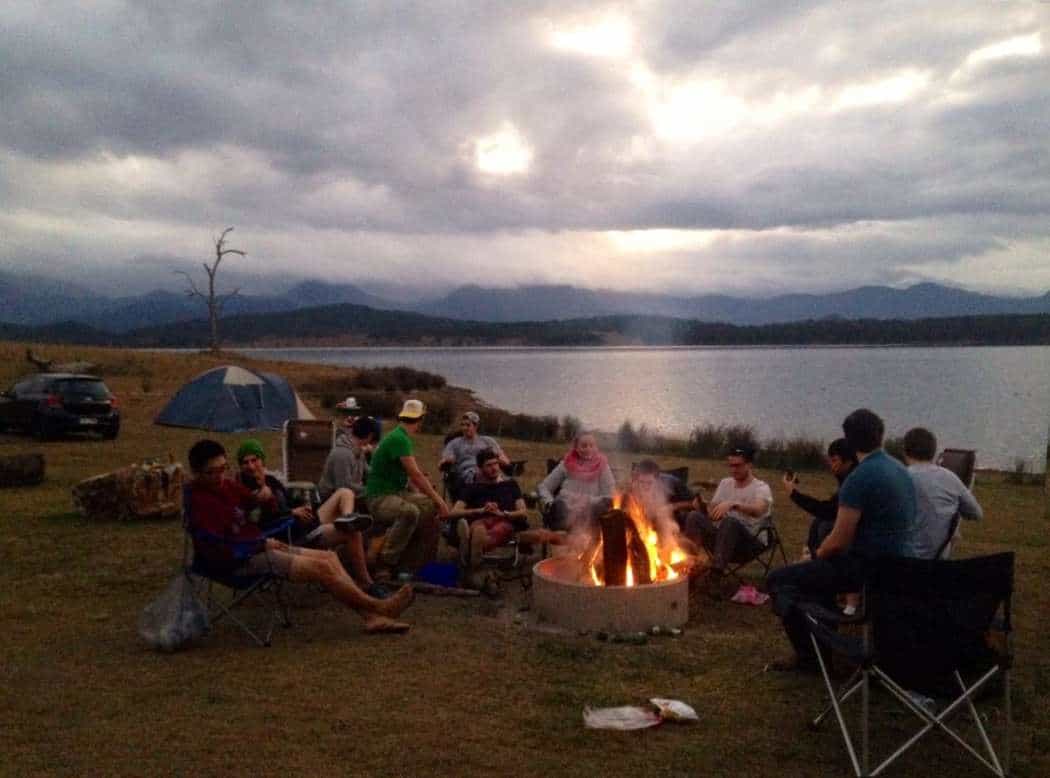
In Queensland's parks and forests, the Queensland Parks and Wildlife Service (QPWS) says you can have campfires in many camping areas, as long as you:
- use the fireplaces, fire rings or existing fire locations provided, and
- no fire ban or fire prohibition is in force.
Some parks, or parts of parks, do not allow campfires at all. QPWS lists the parks and forests where campfires are permitted, and individual park pages explain the rules for each camping area.
Outside national parks, rules vary. Many private campgrounds allow fires in provided fire pits; others do not. Seqwater says campfires are prohibited on its land unless specifically advised. Councils may also have local laws on fires.
Bring your own firewood
QPWS asks campers to bring clean firewood and kindling from outside the area. All timber and tree branches within parks and forests are protected and cannot be collected or used for fires. Fallen timber provides shelter for wildlife and returns nutrients to the soil.
Permits for larger fires
The Queensland Fire Department says that, in general, an open fire needs a permit from a fire warden unless it is smaller than 2 metres in all directions and adequate precautions are taken to prevent it spreading. A camping fire should never be anywhere near that size, but the rule is a good reminder that fire is regulated in Queensland.
< 2 m
Open fire size
Larger generally needs a permit
4 levels
Fire danger ratings
Moderate to Catastrophic
Water
To extinguish
Not sand or soil
Fire bans and fire prohibitions
Two separate systems can stop you lighting a campfire in Queensland.
Fire bans
The Queensland Fire Department can declare a fire ban when conditions mean fires would be difficult to control and would endanger communities. A fire ban normally covers an entire local government area, including the parks and forests within it, and stays in force until it is cancelled.
According to QPWS, when a fire ban is in place, lighting fires in the ban area is prohibited. That includes QPWS fire rings and barbecues, wood-fuelled braziers and barbecues, and appliances using ash-producing fuels or heat beads, such as Oz-pigs and similar appliances.
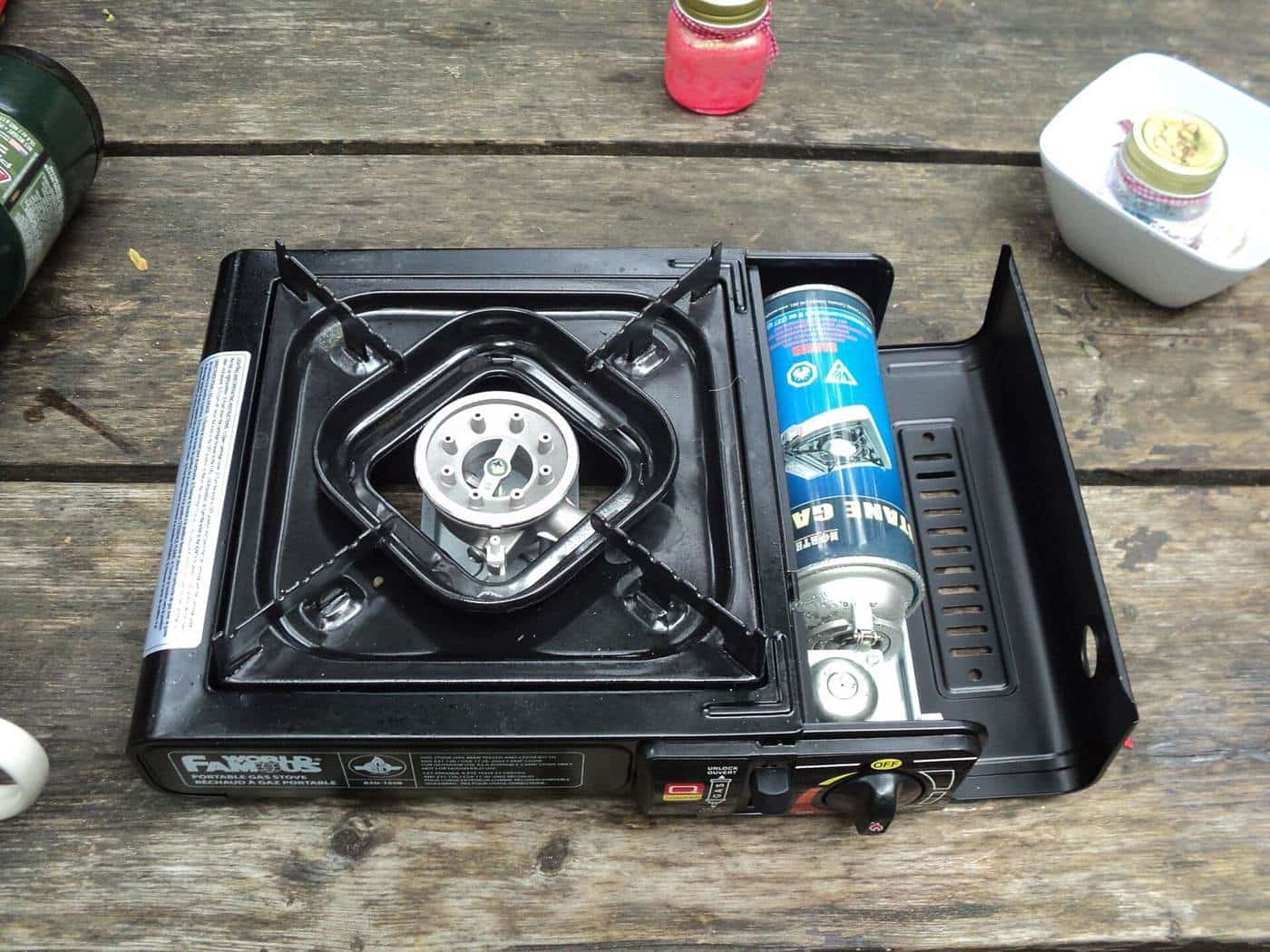
Gas and electric barbecues, including gas and spirit stoves, may be used during fire bans, provided they cannot generate airborne embers or ignite nearby ground fuels, are not left unattended and are suitably contained.
QPWS fire prohibitions
QPWS can impose a fire prohibition in all or part of a park or forest, even when there is no wider fire ban, for example when there are very high fire danger conditions in the park or nearby bushland. Some protected areas have long-term or permanent prohibitions to reduce bushfire risk, protect wildlife habitat, improve visitor safety and reduce rubbish being burnt in fires.
During a fire prohibition, no campfires may be lit. Some cooking and heating appliances can still be used, but QPWS says they must use gas or manufactured fuel (not wood), be used only for cooking or heating, sit at least 20 cm off the ground and more than 2 m from flammable material including vegetation, be unable to generate airborne embers, be fully self-contained with no exposed flame, and never be left unattended. Wood-fuelled braziers, fire drums and wood barbecues must not be used.
Fire prohibitions are advertised on park alerts and park signs, and may also be included in permit information.
Fire danger ratings
Since 1 September 2022, Australia has used the Australian Fire Danger Rating System. It has four levels:
- Moderate: plan and prepare.
- High: be ready to act.
- Extreme: take action now to protect your life and property.
- Catastrophic: for your survival, leave bushfire risk areas.
Fire danger ratings are separate from fire bans, but high ratings often accompany bans. On days of Extreme or Catastrophic fire danger, think carefully about whether to be camping in bushland at all.
Building and managing a campfire safely
When campfires are allowed:
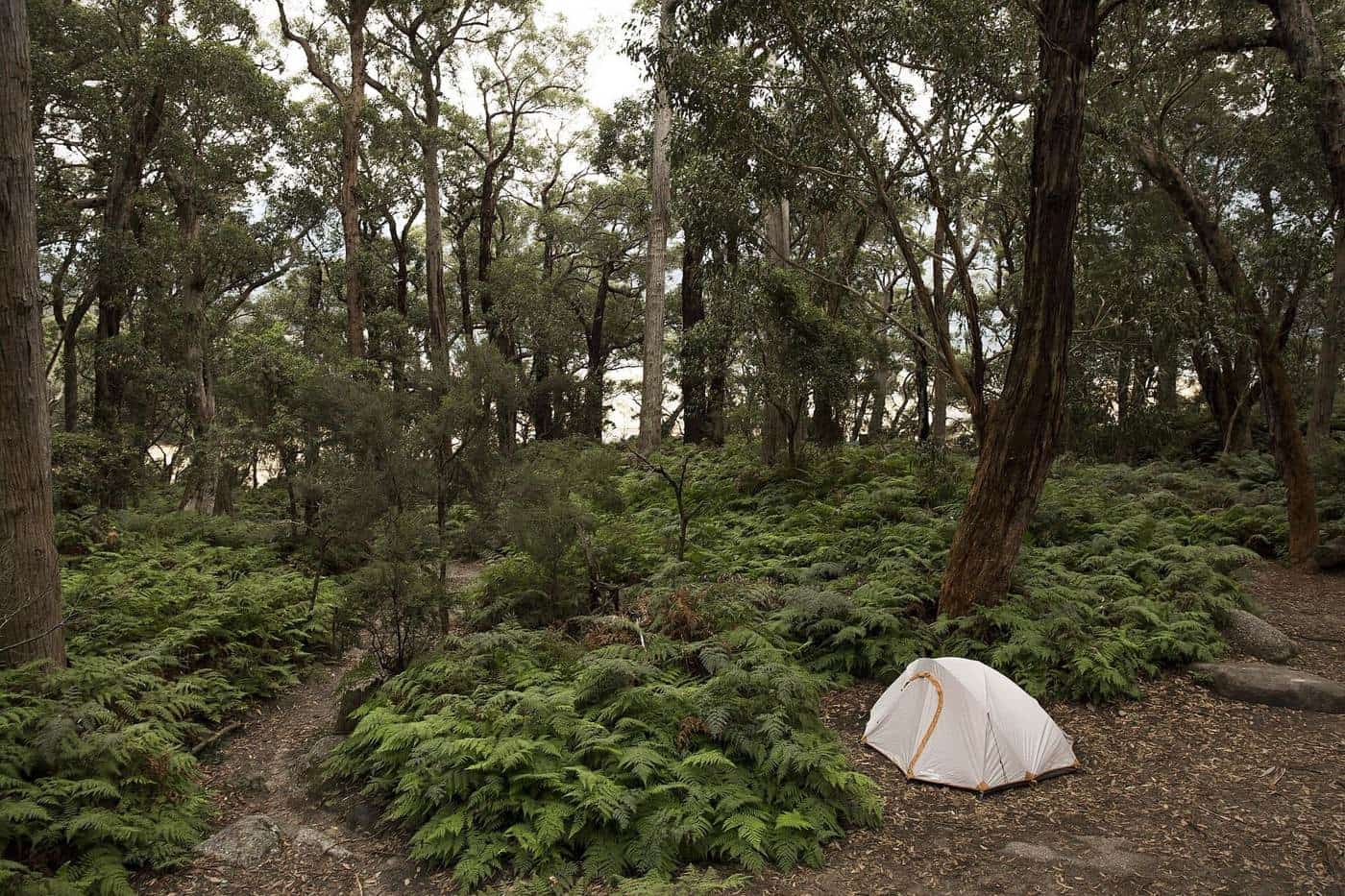
- Use the provided fireplace or fire ring, or an existing fire site. Do not build new fire rings.
- Clear the area around the fire of leaves, grass and anything flammable.
- Keep it small. A small fire is easier to control, uses less wood and is better for cooking.
- Use seasoned, dry, untreated wood. Never burn rubbish, plastics or treated timber.
- Never use flammable liquids such as petrol to light or revive a fire.
- Keep water nearby, ideally a full bucket, before you light the fire.
- Never leave a fire unattended, even for a short time, and never leave it burning overnight.
- Watch the wind. Embers can travel a long way. If the wind picks up, put the fire out.
- Keep children and pets well away, and set clear rules about the fire area.
Putting a campfire out properly
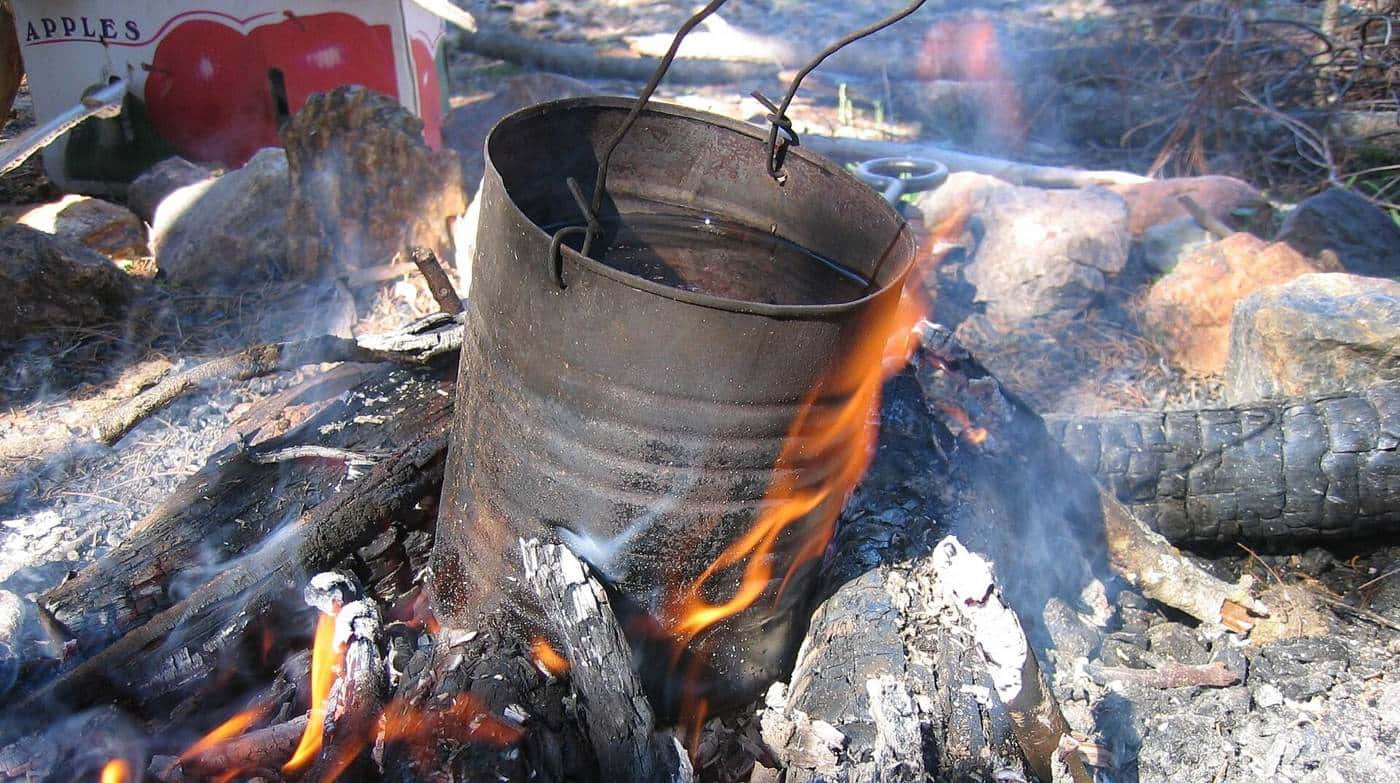
Most campfire burns happen after the fire seems to be out. Queensland Government camping safety advice is to put out campfires with water, not sand or soil. Covering coals with sand or soil can keep them hot for hours, and Queensland Government advice warns that contact with a fire at 70°C or hotter can cause serious burns. Children are especially at risk, because buried coals look like ordinary ground.
To extinguish a fire properly:
- Let it burn down to ash and coals, if you have time.
- Pour water over the coals and embers, slowly.
- Stir the ashes with a stick or spade.
- Pour more water and stir again.
- Check with the back of your hand held close to the ashes, without touching, that no heat remains.
- Repeat until everything is cold.
Never leave a site until your fire is completely out.
First aid for burns
For burns, the standard first aid advice is to cool the burn under cool running water for 20 minutes, remove jewellery and clothing near the burn unless stuck to the skin, and cover it loosely with a clean, non-stick dressing. Do not use ice, butter or creams. For serious burns, burns to the face, hands or genitals, or burns to children, call Triple Zero (000).
When you cannot have a fire
A fire ban does not have to spoil your trip:
- Cook on a gas stove or barbecue that meets the fire ban conditions.
- Use lanterns and fairy lights to create atmosphere.
- Pack extra warm layers for cool evenings.
- Make the most of stargazing, which is often better without firelight.
Campfire safety checklist
0 of 8 done
Ticks are saved in this browser only.
Related guides
Read camp stoves and gas safety for cooking when fires are banned, and Leave No Trace camping for minimising campfire impacts.
Frequently asked questions
Can I have a campfire in a Queensland national park?
In many camping areas, yes, but only in the provided fireplaces, fire rings or existing fire locations, and only when no fire ban or park fire prohibition is in force. Some parks do not allow campfires at all. Check the park's page and park alerts.
What is the difference between a fire ban and a fire prohibition?
A fire ban is declared by the Queensland Fire Department, usually for a whole local government area. A fire prohibition is imposed by QPWS for all or part of a park or forest, and can apply even when there is no wider fire ban.
Can I use a gas stove during a fire ban?
QPWS says gas and electric barbecues, including gas and spirit stoves, may be used during fire bans if they cannot generate airborne embers or ignite nearby ground fuels, are not left unattended and are suitably contained.
Can I use an Oz-pig style cooker during a fire ban?
No. QPWS says a fire ban includes appliances using ash-producing fuels or heat beads, such as Oz-pigs and similar appliances.
How do I put out a campfire?
With water, not sand or soil. Pour water over the coals, stir and pour again until everything is cold to the touch. Queensland Government advice warns that buried coals can stay hot enough to cause serious burns.
Do I need a permit for a campfire?
The Queensland Fire Department says open fires generally need a permit from a fire warden unless they are smaller than 2 metres in every direction and precautions are taken to stop them spreading. Parks, councils and fire bans have their own rules on top of this.
Sources and further reading
Facts on this page were checked against these primary and official sources. Conditions change — confirm before you travel or buy.
- Camp fires and cooking — Queensland Parks and Wildlife Service
- Lighting fires in Queensland — Queensland Fire Department
- Camping safety — Queensland Government
- Australian Fire Danger Rating System — Australasian Fire and Emergency Service Authorities Council
- Burns and scalds — healthdirect Australia